When the Budget Cuts, Students Bleed: How School Funding Decisions Are Quietly Rewriting the Rules of Academic Success
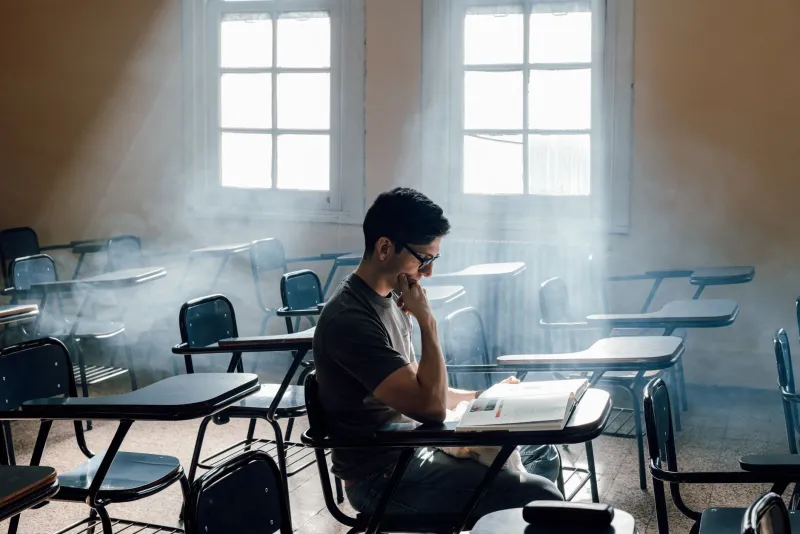
Every spring, school board members gather in meeting rooms across the United States to make decisions that will shape thousands of students' futures. They debate line items, review spreadsheets, and ultimately approve budgets that determine which programs survive and which disappear. Most students never attend these meetings. Most families never read the final documents. And yet, the outcomes of those conversations follow students into college applications, scholarship competitions, and career trajectories for years to come.
The uncomfortable truth is this: in American public education, financial decisions made by adults — often far removed from the classroom — are quietly redefining what it means to succeed academically. And students in underfunded districts are increasingly competing on an uneven playing field without ever being told the rules have changed.
The Programs That Disappear First
When budget pressures mount, certain programs are almost always the first to go. Arts and music education, extracurricular sports, tutoring centers, and college preparation services are frequently classified as "supplemental" — meaning they're expendable in the eyes of budget committees even when they're indispensable in the eyes of students.
Consider Advanced Placement courses. In wealthier districts, students may have access to fifteen or more AP offerings, giving them the ability to demonstrate academic rigor to colleges and potentially earn college credit before graduation. In underfunded schools, that list might shrink to four or five — or disappear entirely. The College Board charges students roughly $98 per AP exam, a cost that many families in lower-income districts cannot absorb, even when fee waivers are technically available. When schools cut AP programs or reduce exam subsidy support, they aren't just eliminating a class. They're eliminating a credential that admissions officers at selective universities have come to expect.
The same logic applies to dual enrollment programs, SAT/ACT prep resources, and college counselor staffing ratios. The American School Counselor Association recommends one counselor for every 250 students. The national average hovers around 1 to 408. In some underfunded districts, a single counselor manages over 700 students — making individualized college guidance nearly impossible.
Sports, Activities, and the Soft Skills Gap
It would be a mistake to view extracurricular cuts as merely inconvenient. Research consistently shows that participation in organized sports, performing arts, student government, and academic clubs develops the kind of transferable competencies — leadership, time management, collaborative problem-solving — that employers and college admissions committees actively seek.
When a district eliminates its junior varsity soccer team or shuts down its debate program due to funding constraints, it isn't just removing an after-school activity. It's removing a training ground for skills that cannot be taught through a textbook. Students in better-funded districts, meanwhile, continue building their resumes with varsity letters, regional competition placements, and leadership titles that tell a compelling story on a college application.
This disparity creates what education researchers sometimes call a "soft skills gap" — a widening divide not in raw academic ability, but in the breadth of experiences students can document and discuss when presenting themselves to the world beyond high school.
The Hidden Cost of "Free" Public Education
Public school in America is technically free. In practice, it rarely is. Lab fees, athletic participation fees, instrument rentals, field trip costs, yearbook purchases, and technology requirements all add up to what some researchers estimate as hundreds — occasionally thousands — of dollars per year for a single student.
When schools face budget shortfalls, these costs frequently shift from the institution to the family. A chemistry lab that once had district-funded supplies may begin charging a $40 semester fee. A school that previously covered AP exam costs for all students may begin requiring families to pay out of pocket. A sports team that was fully subsidized may introduce a "pay to play" model.
For middle- and upper-income families, these shifts are manageable inconveniences. For families living paycheck to paycheck, they represent genuine barriers to participation. The student who cannot afford the AP exam fee doesn't just lose a test score — they lose a line on their transcript, a potential college credit, and the signal of intellectual ambition that selective schools are looking for.
What Students Can Actually Do
Understanding the system is not the same as accepting it. There are concrete steps students can take to advocate for themselves and their peers within a funding-constrained environment.
Attend school board meetings. Board meetings are public, and student voices carry more weight than most students realize. Speaking during public comment periods — even briefly — draws attention to program cuts and signals to decision-makers that students are paying attention.
Apply aggressively for external funding. Numerous nonprofits, foundations, and community organizations offer grants specifically designed to cover AP exam fees, extracurricular participation costs, and college application expenses. Organizations like College Advising Corps, College Possible, and local community foundations often have resources that go unclaimed simply because students don't know they exist.
Leverage free college prep resources. Khan Academy offers free, official SAT prep in partnership with College Board. Many public libraries provide free access to tutoring platforms. First-generation student programs at nearby colleges sometimes offer free campus visits and application workshops. These resources don't replace what a well-funded school provides, but they narrow the gap.
Build relationships with the counselors you have. Even an overextended school counselor can be a powerful advocate when a student takes the initiative to schedule regular check-ins, ask specific questions, and demonstrate genuine engagement with the college planning process.
Document everything. In the absence of a robust extracurricular program, students can create their own record of meaningful activity — independent projects, community service, self-directed learning, part-time work — and learn to articulate the skills those experiences represent.
The Bigger Picture
The funding disparities that shape student opportunity in American schools are not accidental. They are the product of a school financing system that ties education budgets heavily to local property taxes — a structure that almost mathematically ensures wealthier communities will have better-resourced schools. Several states have pursued reforms to address this inequity, with mixed results. Federal programs like Title I provide supplemental funding to high-poverty schools, but they do not fully close the gap.
For students navigating this system right now, the most important thing to understand is that the deck may be stacked — but it is not sealed. Awareness of how funding decisions affect your opportunities allows you to seek alternatives, ask better questions, and advocate with specificity rather than frustration. The students who succeed in underfunded environments are rarely the ones who simply worked harder. They are the ones who understood the system well enough to find the doors that were still open.
Your school's budget is not your destiny. But knowing what it contains — and what it doesn't — may be the most practical piece of academic intelligence you can carry into your future.