Who Does the Work When Nobody's Watching? Inside the Invisible Economy of the Group Project
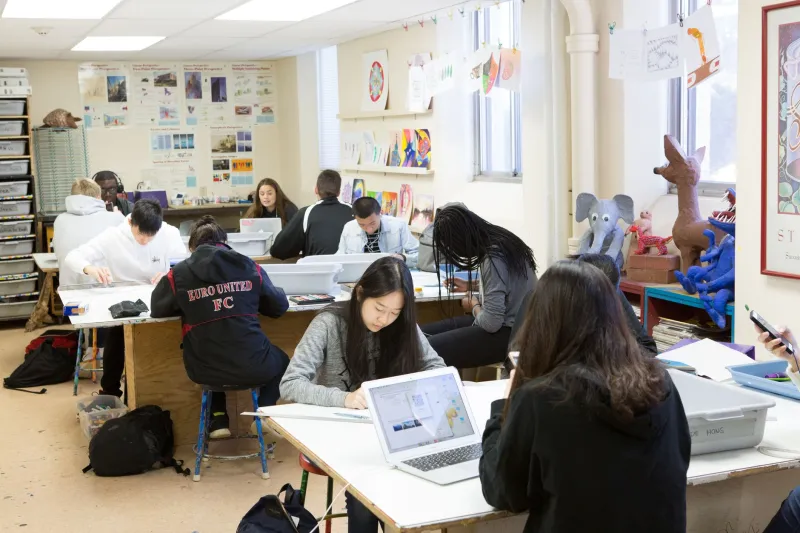
Somewhere in an American high school this morning, a student is opening a shared Google Doc at 11 p.m., fixing citations for a project three other people will receive credit for tomorrow. Somewhere else, a teammate is drafting a message to the teacher that begins, "I don't want to be a snitch, but..." The group project is one of the most common assignments in American education, and one of the least honest. What happens between the assignment sheet and the final submission is an economy — informal, unwritten, and surprisingly instructive about the working world students are headed toward.
The Four Currencies of Every Group
Watch enough group projects unfold and you'll notice they run on four currencies: labor, time, credit, and goodwill. Labor is the actual work — the slides, the research, the editing. Time is who gives up evenings and who contributes nothing but a name on the title slide. Credit is what the grade distribution claims everyone earned equally. Goodwill is the social lubricant that keeps the whole arrangement from collapsing into open warfare.
Most groups settle into predictable roles within the first meeting. There is the coordinator, who builds the timeline nobody asked for. The perfectionist, who redoes other people's sections rather than argue. The ghost, who misses every meeting but always has an excuse involving a job, a sibling, or a dead grandmother. And the negotiator, who talks a good game in front of the teacher and produces nothing when the deadline approaches.
None of these roles appear on the assignment sheet. All of them shape the grade.
Why Freeloading Is a Rational Strategy
Here is the uncomfortable structural truth: in most group assignments, the freeloader is making a calculated bet. If the group succeeds, they share the grade. If the group fails, the blame diffuses across four or five people, and no single student takes the fall. Economists call this the free-rider problem; students call it "letting everyone else carry."
The system rewards it more often than teachers realize. A student who contributes 10 percent of the effort on a project worth 20 percent of their grade has made a better return on investment than the classmate pulling all-nighters. Until the incentives change, the behavior won't.
The Paper Trail Is Your Leverage
If you're the student doing the carrying, indignation is not a strategy. Documentation is.
- Work in shared, timestamped spaces. Google Docs version history, shared folders, and group chats create a record no one can dispute later.
- Assign roles in writing, early. A two-line message — "Confirming: Maya handles slides 1–8, Devon does research, I'll write the script" — turns vague intentions into commitments.
- Keep a simple contribution log. Not a surveillance dossier, just a running note of who did what and when. If a grade dispute ever reaches the teacher, this document does the talking for you.
- Raise problems privately and early. A direct message to a slacking teammate in week one lands very differently than a public accusation in week three.
When to Bring In the Teacher — and How
Going to the teacher is not betrayal; it's escalation, and like any escalation it works best when it's proportionate and factual. The strongest approach is procedural, not emotional: "Our group divided the work on October 3rd as attached. Two sections remain incomplete. I'd like to discuss whether individual grading is possible."
Many teachers will accommodate this if asked — some will offer peer evaluations, others will grade submitted sections individually. A smaller number will insist the group grade stands, which is itself a lesson: some institutions reward the collective regardless of individual effort. Better to learn that in eleventh grade than in your first job.
What the Group Project Is Actually Teaching
Strip away the PowerPoint and the group project is a low-stakes simulation of workplace dynamics: uneven effort, shared accountability, the politics of who gets visibility and who does the invisible labor. The students who learn to negotiate roles, document contributions, and escalate professionally are not just protecting a grade. They are rehearsing skills their future managers will wish every new hire had.
The black market of group work — the trades, the cover-ups, the quiet resentments — exists because the formal system pretends everyone contributes equally. The students who see through that fiction first are the ones who stop being exploited by it.