The Guest in Room 12: What Substitute Teachers Learn About a School in a Single Day
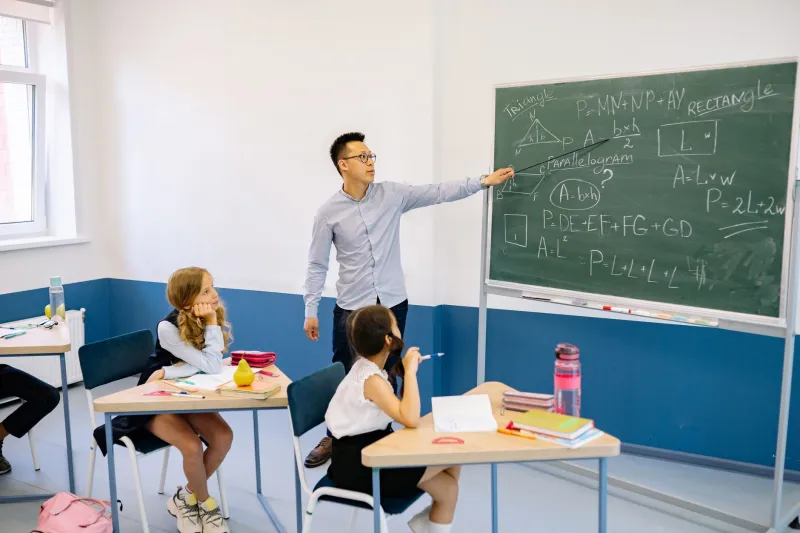
There is a particular kind of knowledge that only one person in a school building possesses, and it is not the principal. It is the substitute teacher — the guest who rotates through the building every few days, carrying a lesson plan of varying quality into rooms full of students they have never met. Over 180 days of turnover, a substitute sees more of a school's true culture than most full-time faculty ever will. What they see should make us think differently about what schools actually teach.
The Lesson Plan as a Confession
The first thing a substitute reads each morning is not a room of students but a folder — and the folder is honest in ways the school's mission statement is not. Some lesson plans arrive as detailed, hour-by-hour roadmaps with seating charts, notes about which student needs to sit near the front, and a backup activity in case the video link fails. Others are a single sticky note: "They know what to do."
That sticky note is a test, and everyone in the room knows it. Sometimes it reflects genuine trust in a class that has earned autonomy. More often, it reflects a teacher who has decided the substitute's day is not their problem. Students can tell the difference immediately, and they respond to each very differently.
Which Rooms Run Themselves
Ask any experienced substitute and they will tell you: you can predict the quality of a class period within ninety seconds of the bell. In some rooms, students who have never seen you before will point out that someone is sitting in the wrong seat, remind you about the warm-up on the board, and politely flag when the fire drill schedule conflicts with fourth period. These are not naturally obedient children. They are students whose regular teacher built routines so durable that they persist without enforcement — systems, not supervision.
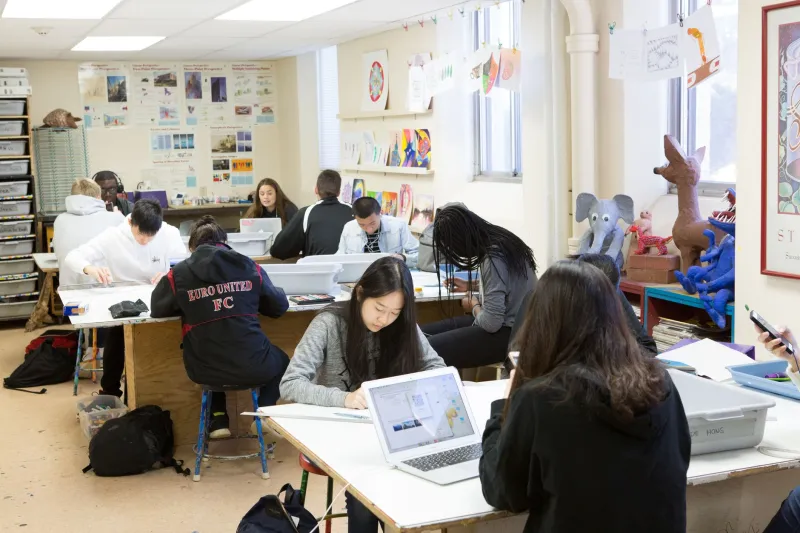
In other rooms, the absence of the usual authority is treated as the removal of all authority. Work stops, phones appear, and a low-grade negotiation begins over how much chaos the guest will tolerate. The substitute learns quickly that this is rarely about the substitute. It is a map of what the regular classroom actually runs on: fear of one specific person, or respect for a functioning structure. When the person leaves, only one of those remains.
The Students Who Thrive Without a Watchdog
Perhaps the most revealing pattern is which students flourish when the regular teacher is out. Every substitute has met the quiet student in the back who, unprompted, keeps working through the entire period — and the class leader who informally keeps order better than any seating chart. These students have internalized the purpose of school rather than merely its surveillance. They are also, notably, often not the students who top the participation grades, which are heavily influenced by how visibly a student engages with the authority figure in the room.
Substitutes also meet the opposite: students who are model citizens at 8 a.m. and unrecognizable by sixth period. The difference between those two students is rarely character. It is the social ecosystem of the classroom — who is watching, and what the peer culture rewards.
What This Means for the Rest of Us
The substitute's day is a control experiment: the same students, same material, same building — with one variable removed. The results suggest something uncomfortable about how we talk about school. We tell students that discipline, honesty, and effort are personal virtues. The substitute's observations suggest they are, to a remarkable degree, products of environment and design.
For students, there is a practical takeaway buried in this. The classes that run themselves are the ones where you can actually learn on a sub day — and being the student who works when nobody checks is a habit that compounds. For teachers and administrators, the lesson is starker: any classroom structure that collapses the moment you step out of the room was never a structure. It was a performance, and everyone knew their cue.
The substitute walks out at 3 p.m. knowing things the evaluation forms will never capture. The rest of the school would do well to ask.