Registration Season Playbook: The Counselor Meeting That Decides Your Next Year in Fifteen Minutes
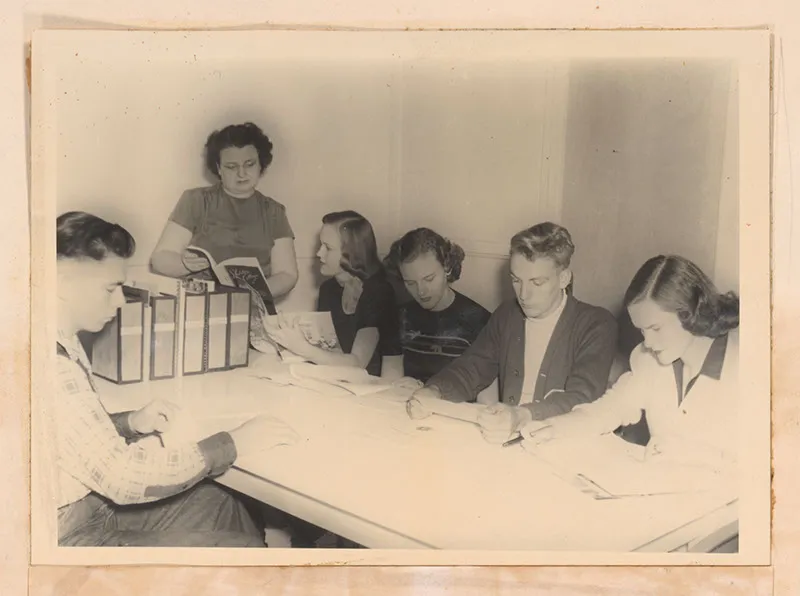
Photo: Published by Screven-Jenkins Regional Library System, Sylvania, Georgia, Public domain, via Wikimedia Commons
Sometime between January and March, a fifteen-minute meeting will quietly determine the difficulty of your junior year, the shape of your transcript, and — indirectly — the range of colleges that will seriously consider you. It is the course registration meeting, and compared to the SAT, it receives approximately zero preparation from the average student.
That asymmetry is a mistake. Standardized tests can be retaken. A schedule locked in February is, in most schools, locked for the year.
Understand What Your Counselor Is Actually Managing
Begin with empathy for the other side of the desk. A school counselor may be responsible for four hundred or more students, each needing a schedule built from a finite grid of sections, teachers, and rooms. Conflicts are inevitable, popular courses fill quickly, and counselors prioritize requests they can process efficiently.
This means the student who arrives prepared is not just more likely to get their courses — they are easier to help, and easier-to-help students get remembered when an exception needs an advocate.
Do the Research Before You Sit Down
Walking in unprepared cedes the agenda to whoever speaks first. Instead, arrive with three things:
A draft schedule. A complete list of primary courses and alternates, checked against your school's course catalog for prerequisites and grading-period availability.
A verified transcript audit. Know which graduation requirements you have met, which remain, and which college-preparation expectations (four years of math, lab sciences, foreign language) your target colleges assume.
A one-sentence rationale for anything unusual. If you are requesting a level change — say, moving from regular to honors chemistry — know your current grade, your study habits, and your reason, stated in one sentence.
Seven Phrases That Get Results
- "I reviewed the course catalog and I'd like to register for X, with Y and Z as alternates."
- "My current grade in this subject is ___, and I've completed the prerequisite."
- "Can you walk me through what a student typically needs to move into that level?"
- "If that section fills, what's the process for the waitlist?"
- "Is there a teacher recommendation form I should start now?"
- "What's the deadline for schedule changes after the school year starts?"
- "Could you note this request in my file so we have a record?"
Each of these does the same thing: it signals that you have done your part, which moves the counselor's energy toward solving your actual problem.
The Three Phrases That Kill a Request
- "My friend is taking it." Peer scheduling is not an academic rationale, and counselors hear it constantly.
- "It'll be easy." This argues against the course's rigor — the very thing that gives it value on a transcript.
- "My parents said I have to." It removes your ownership and invites the counselor to negotiate with someone who is not in the room.
The Follow-Through
Get written confirmation of your registered courses before you leave, whether that is a printout or a screenshot of the registration portal. Verify it again a week later. Scheduling software makes errors, and the students who catch them early are the ones who checked.
Fifteen minutes of preparation for a fifteen-minute meeting. Measured against the year it produces, it may be the best return on time available to you this winter.