Your School Is Running an Economy — And You're a Participant Whether You Know It or Not
Most students walk through the school day thinking about tests, friendships, and what's for lunch. What they rarely consider is that the very systems organizing their day — the bell schedule, the cafeteria line, the dress code — are functioning as a low-key economics classroom. Nobody hands you a syllabus for it. No teacher announces it at the start of the semester. But the lessons are happening anyway, and the students who recognize them early gain a serious edge in understanding how money, resources, and decision-making work in the real world.
This is what educators sometimes call the hidden curriculum — the values, behaviors, and knowledge that schools transmit not through explicit instruction, but through the structures students live inside every single day.
The Bell Schedule Is a Lesson in Scarcity and Opportunity Cost
Economics, at its core, is about scarcity: there is never enough time, money, or resources to do everything you want. Your school's daily schedule demonstrates this principle with almost uncomfortable precision.
You have a fixed number of periods. You cannot take every class you want. Choosing AP Chemistry means not choosing Art Studio. Signing up for an early-morning zero period to fit in an elective means sacrificing sleep. Every scheduling decision involves a trade-off — and that trade-off has a name in economics: opportunity cost.
Opportunity cost is the value of the next-best option you gave up when you made a choice. When you pick one elective over another, you are not just choosing a class — you are practicing one of the most fundamental skills in personal finance. Every budget decision an adult makes operates on exactly this logic. The family that chooses to save for a vacation gives up the option of remodeling the kitchen. The college student who works part-time gives up study hours. Your schedule is training you to think in trade-offs before you ever have to manage a paycheck.
The Cafeteria Is a Market — And It Is Not a Neutral One
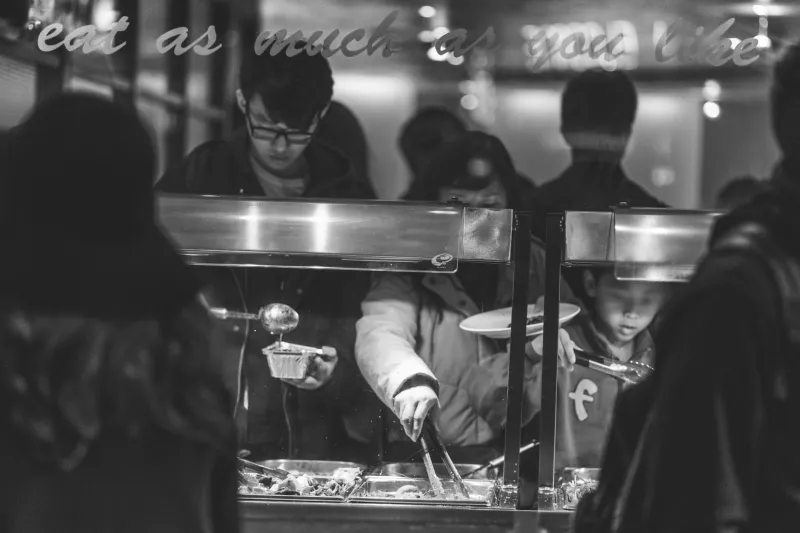
Walk into any American high school cafeteria and you are stepping into a functioning marketplace. There are prices, purchasing decisions, supply constraints, and — if you look closely — a pricing structure that reflects real economic policy debates happening at the national level.
Federal programs like the National School Lunch Program subsidize meals for students who qualify for free or reduced-price lunch. This is a direct example of a government intervention in a market, designed to address inequality in access to nutrition. For students who qualify, the cafeteria demonstrates how public subsidies work. For students who pay full price, the cafeteria models consumer decision-making: Is the hot meal worth $3.75, or does packing lunch represent better value?
Beyond pricing, notice what the cafeteria sells. The items positioned at eye level, near the register, or bundled into combo deals are not placed there by accident. Schools — and the food service companies that often manage their cafeterias — apply the same retail psychology used in grocery stores and fast food chains. Recognizing these tactics is the beginning of becoming a financially literate consumer.
There is also the matter of food as currency. In many schools, trading snacks, lending lunch money, or covering a friend's meal are informal economic transactions. These micro-exchanges mirror the informal economies that exist in every community, and they teach students about trust, reciprocity, and the social dimensions of money — concepts that formal economics classes often skip entirely.
Dress Codes and Uniforms: The Economics of Standardization
Few school policies spark more debate than dress codes and uniform requirements, but beneath the arguments about self-expression lies a rich set of economic lessons.
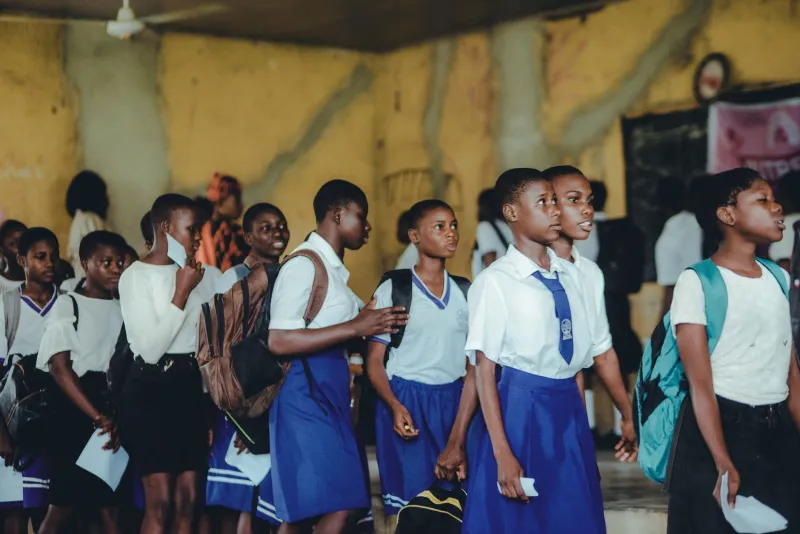
When a school requires uniforms, it is making a deliberate choice to reduce visible income inequality among students. The logic is straightforward: if everyone wears the same clothes, the student whose family cannot afford name-brand sneakers is less visibly marked by poverty. This is a form of economic leveling — using standardization to reduce the social costs of inequality.
But uniforms are not free. Families must purchase specific items, often from designated vendors, which creates a captive market. If only one supplier sells the approved uniform, that supplier faces no competitive pressure to lower prices. Students and families navigating uniform requirements are experiencing firsthand how market monopolies and restricted competition affect consumer costs.
For schools with dress codes rather than full uniforms, the economics shift slightly. Students must make purchasing decisions within defined constraints — no logos, neutral colors, no ripped jeans — which mirrors the kind of constrained budgeting adults face constantly. Buying work-appropriate clothing on a limited income, for example, requires exactly the kind of creative resource allocation that dress code compliance teaches.
Fees, Fundraisers, and the Real Cost of Participation
One of the most direct economic lessons school offers is also one of the least discussed: the cost of participation. Sports registration fees, club dues, field trip payments, lab fees for science courses, instrument rentals for band — these expenses add up, and navigating them requires genuine budgeting skills.
Families across income levels manage these costs differently. Some students decline activities because the fees are prohibitive. Others fundraise, applying for waivers, or prioritize which activities are worth the expense. This is budgeting under real constraints, not a textbook exercise.
Fundraisers themselves are compressed economics courses. Selling chocolate bars or candles for a school team teaches students about wholesale versus retail pricing, profit margins, sales strategy, and goal-setting. The student who sells the most candy bars has, whether they realize it or not, practiced the fundamentals of small business operation.
What You Can Do With This Knowledge
Recognizing that your school is an economic system does not require a cynical view of education. It simply means paying attention at a deeper level.
Start noticing the choices you make daily and what you are giving up to make them. When you pick one lunch option over another, ask yourself why. When your school announces a new fee or policy, consider who benefits and who bears the cost. When you feel frustrated by a scheduling conflict, recognize that you are experiencing scarcity — and that your response to scarcity is a skill worth developing.
Financial literacy is rarely taught as a standalone subject in American schools, despite being one of the most consequential skills a person can develop. But the raw material for that education is everywhere around you. The schedule, the cafeteria, the dress code, the fees — they are all chapters in a course that nobody formally enrolled you in.
The students who read those chapters carefully arrive at adulthood with something most of their peers lack: an intuitive understanding of how systems distribute resources, who benefits from those distributions, and how to make smarter decisions within constraints.
That is not a small thing. That is the beginning of genuine financial intelligence.