What Happens in the Hallway Stays in Your Future: Decoding the Unwritten Social Rules of Unsupervised School Spaces
Every student knows there are two versions of school. There is the official version — the one with syllabi, graded rubrics, and teacher-monitored discussions. And then there is the other version, the one that plays out in the three minutes between classes, at the back table of the cafeteria, and in the reflective silence of a school bathroom. That second version, largely invisible to administrators and rarely discussed in college counseling sessions, may be shaping your social future more precisely than any AP course.
This is not an argument that academic performance is irrelevant. It is an argument that something equally consequential is happening in the spaces your school never officially grades — and that students who understand those dynamics tend to navigate adult life with a distinct advantage.
The Social Architecture of Unsupervised Spaces
School bathrooms, hallways, and informal gathering zones function as what sociologists call "backstage" environments — places where the performance of institutional compliance temporarily relaxes. In a classroom, behavior is largely regulated by the presence of authority. Remove that authority, and a different set of social norms immediately activates.
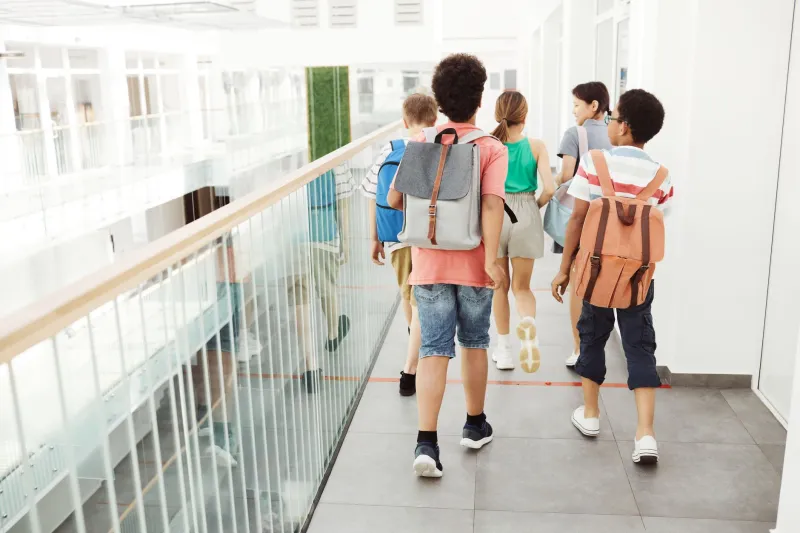
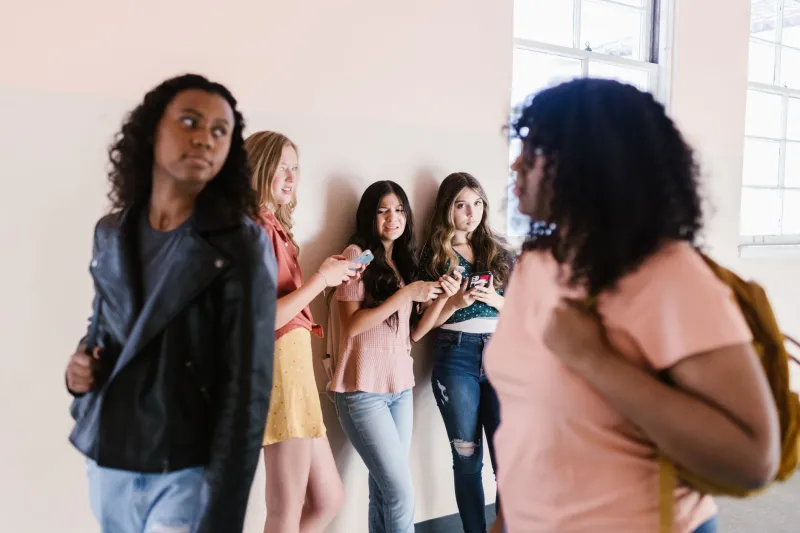
In these spaces, students are not performing for teachers. They are performing for each other. And those performances are governed by a remarkably consistent, if entirely unwritten, set of rules. Who occupies which mirror in the bathroom. Who sits at which lunch table without being invited. Who can interrupt a hallway conversation and who cannot. These micro-decisions constitute a living map of social capital — a currency that functions independently of grade point averages.
Social capital, in this context, refers to the network of relationships, trust, and informal influence a person accumulates over time. Research consistently shows that this form of capital is a powerful predictor of professional outcomes. A 2019 study published in the American Journal of Sociology found that social network quality during adolescence was among the strongest predictors of adult income and occupational status — outperforming measures of academic achievement in several demographic groups.
What Peer Hierarchies in Private Spaces Actually Measure
The informal hierarchies that emerge in unsupervised school environments are not arbitrary. They tend to reflect and rehearse several competencies that colleges and employers later attempt to assess through structured means.
Situational awareness. Students who navigate unsupervised spaces effectively have learned to read a room quickly. They understand who is in conflict with whom, which conversations are open and which are closed, and when it is appropriate to speak versus observe. This is precisely the skill that hiring managers describe when they reference "reading the room" in professional settings.
Boundary recognition. The bathroom hierarchy, for all its informality, teaches students something genuinely complex: that social boundaries exist even without explicit enforcement. Learning to recognize an unspoken boundary — and to respect it without being told — is a form of emotional regulation that takes years to develop. Students who struggle with this in high school often find themselves struggling with it in team environments, dormitories, and eventually workplaces.
Identity negotiation. Unsupervised spaces are where students most actively test and revise their self-presentation. The version of yourself you perform in front of a teacher is often a managed, constrained version. In the hallway, you are negotiating your identity in real time, responding to peer feedback without a safety net. This iterative process of social identity formation is foundational to the kind of self-awareness that adult professional environments demand.
Why Colleges and Employers Care About This (Even If They Don't Say So)
College admissions officers rarely ask applicants to describe their bathroom behavior. But they do ask about leadership, conflict resolution, empathy, and collaborative experience — all of which are rooted in exactly the kind of peer dynamics that unfold in informal spaces.
When a college application asks you to describe a time you navigated a difficult interpersonal situation, the honest answer for most students traces back not to a classroom project but to an unscripted moment in the hallway, at a lunch table, or in some corner of the school that no teacher ever monitored. The ability to articulate those experiences — to reflect on informal social dynamics with clarity and maturity — is precisely what distinguishes a compelling personal essay from a generic one.
Similarly, employers conducting behavioral interviews are attempting to surface the same competencies. Questions like "Tell me about a time you had to manage a difficult team dynamic" or "Describe a situation where you had to navigate competing social pressures" are direct attempts to measure the social intelligence that informal school environments either developed or failed to develop.
Navigating These Dynamics With Intention
Understanding that unsupervised spaces are, in effect, a continuous social intelligence workshop changes how a thoughtful student might approach them. This does not mean performing inauthentically or maneuvering for social status. It means approaching these environments with the same reflective attention you might bring to a challenging academic subject.
Consider a few practical reframings:
Observe before you act. In any new social environment — a new school year, a different lunch period, a club you just joined — spend time observing the informal norms before attempting to assert yourself within them. This mirrors the professional practice of organizational onboarding, where new employees are advised to listen before they lead.
Treat exclusion as data, not judgment. If you find yourself navigating the edges of a social group rather than its center, resist the impulse to interpret that as a verdict on your worth. Instead, treat it as information about the group's existing structure and your current position within it. Social capital is built incrementally, and understanding where you are starting from is the first step toward building it deliberately.
Practice repair. Unsupervised spaces are where most peer conflicts originate. They are also where the most genuine forms of reconciliation happen. The ability to repair a damaged relationship — to approach someone after a hallway misunderstanding or a cafeteria slight and address it directly — is one of the most undervalued social skills in adolescent development. Students who practice this in high school arrive at college and the workplace with a demonstrable advantage.
The Curriculum Nobody Assigns
The irony of these informal social environments is that they are simultaneously the most consequential and the least acknowledged part of the school experience. No teacher assigns a grade for how well you read a room. No transcript records your ability to navigate a social hierarchy with grace. And yet these are among the competencies that will most directly determine the quality of your professional relationships, your capacity for leadership, and your ability to build the kind of social networks that open doors.
The school bathroom, the crowded hallway, the cafeteria at peak noise — these are not interruptions to your education. They are, in many respects, the most demanding classroom your school offers. The students who recognize that, and who approach those spaces with the same intentionality they bring to their academic work, tend to graduate with something that no GPA can fully capture: genuine social fluency.
That fluency, more than almost any credential, is what the world outside your school is waiting to see.